Stress Management Techniques for Students and Workers in 2026
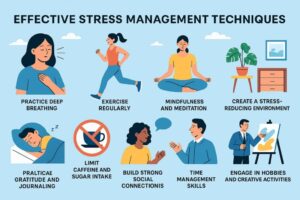
Stress is an unavoidable part of modern life, but managing it effectively is essential for mental health, productivity, and overall well-being. Students and professionals encounter multiple stressors including academic pressure, workplace deadlines, and personal challenges. This guide outlines professional strategies for managing stress in 2026.
Understanding Stress
Stress is the body’s natural response to challenges or demands, influencing emotional, mental, and physical health. Chronic stress can lead to anxiety, depression, reduced productivity, and health issues such as high blood pressure.
2.1 Identify Stressors
Recognizing sources of stress is the first step toward management.
- Self-Assessment: Reflect on daily tasks and events that induce stress.
- Journaling: Document stress triggers and reactions.
- Professional Tip: Awareness allows you to proactively manage and mitigate stressors.
2.2 Mindfulness and Meditation
Mindfulness practices improve focus and reduce anxiety.
- Daily Meditation: Even 10–15 minutes can decrease stress hormone levels.
- Mindfulness Practices: Focus on the present moment and observe thoughts without judgment.
- Breathing Exercises: Techniques like the 4-7-8 method calm the nervous system.
2.3 Physical Activity
Exercise is proven to reduce stress and boost mood.
- Regular Exercise: Cardiovascular activity, strength training, and flexibility exercises.
- Yoga and Stretching: Combine physical movement with relaxation and focus.
- Professional Tip: Consistency is essential; aim for at least 30 minutes daily.
2.4 Time Management to Reduce Stress
Efficient time management reduces workload-related stress.
- Prioritize Tasks: Focus on urgent and important activities.
- Break Large Projects: Divide tasks to make them manageable.
- Set Realistic Goals: Avoid overcommitment to reduce pressure.
2.5 Healthy Lifestyle Choices
Lifestyle habits directly affect stress levels.
- Balanced Diet: Incorporate nutrient-rich foods to support brain function.
- Adequate Sleep: 7–8 hours of quality sleep improves resilience.
- Limit Stimulants: Reduce caffeine and processed sugar intake.
2.6 Social Support
Strong social networks help buffer stress.
- Talk to Friends or Family: Share concerns and receive emotional support.
- Professional Counseling: Mental health professionals provide strategies and coping mechanisms.
- Support Groups: Peer connections foster understanding and encouragement.
2.7 Digital Detox
Technology can contribute to stress if overused.
- Limit Social Media: Reduce exposure to negative or stressful content.
- Screen-Free Periods: Engage in offline activities such as reading or walking.
- Professional Tip: Use technology mindfully to support relaxation.
Conclusion
Stress management in 2026 involves identifying stressors, practicing mindfulness, exercising regularly, managing time efficiently, maintaining healthy habits, leveraging social support, and taking digital breaks. Implementing these techniques promotes mental clarity, improved productivity, and overall well-being.
